Simple Ways to Reduce UV Exposure This Summer
Summer is in full swing, and many areas have already experienced stretches of intense heat and strong sunshine. Whether you're working outdoors, spending time at the pool, or enjoying a weekend hike, taking steps to reduce UV exposure is just as important as staying hydrated. Here are some practical tips, tools, and resources to help protect your skin and eyes while making the most of your time outside.
What are UV Rays?
UV stands for ultraviolet, which is a type of light that comes from the sun. There are two main types of UV rays that can reach us: UVA and UVB. While sunlight helps us stay warm and can be good for getting vitamin D, too much UV light can be harmful to our skin and eyes.
Why is it important to be “Sun Safe”?
Excessive exposure to UV rays can cause sunburns, a painful reddening of the skin. Over time, UV exposure increases your risk for skin cancers like squamous cell and basal cell carcinomas, and cutaneous melanoma. UV light can also damage your eyes and can lead to cataracts and macular degeneration.
It's important to remember that UV rays can penetrate clouds, so you may still be exposed even when the sky is overcast
How Can You Reduce UV Exposure?
Wear Sunscreen: Always put on sunscreen before you go outside. Look for one with SPF 30 or higher and make sure to cover all the exposed skin. Do not forget to reapply it every couple of hours, especially if you are in the water (swimming, water-skiing, etc.) or sweating.
Wear Protective Clothing: When you are out in the sun, wear a wide-brimmed hat to protect your face and sunglasses to protect your eyes. Light clothing with long sleeves and pants can help cover your skin. Choose clothing designed with integrated sunscreen protection. Quality sunglasses with UV protection help reduce UV exposure, even when sunlight is reflected from water, sand, or pavement.
Seek Shade: Find a shady spot under a tree or use an umbrella when the sun’s rays are strongest, especially between 10 a.m. and 4 p.m. Keep in mind that surfaces such as water, sand, pavement, and even snow can reflect UV rays, so shade alone may not completely eliminate exposure.
Check the UV Index: The UV index tells you the strength of the sun's rays each day. The higher the number, the more you need to be careful. You can find this information on weather apps or websites.

Do not forget to practice extra care for certain demographics:
- babies and children
- fair skinned people, including those with red or fair hair
- people with light colored eyes
- people with lots of freckles or moles
- anyone with a previous history of sunburn
- anyone that has used tanning equipment
- anyone with a personal or family history of skin cancer
- people with certain medical conditions or those that are immunocompromised
- anyone taking medicine which may increase photosensitivity, such as tetracyclines (including doxycycline), oral hypoglycemic drugs, and diuretics.
Use smart tools to track UV Exposure
Using smartphone apps to track UV exposure is a great way to stay safe and informed while enjoying the outdoors. Most include the daily UV Index, which uses a scale from 1 to 11+ to indicate the strength of the sun's ultraviolet rays and when extra precautions are recommended.
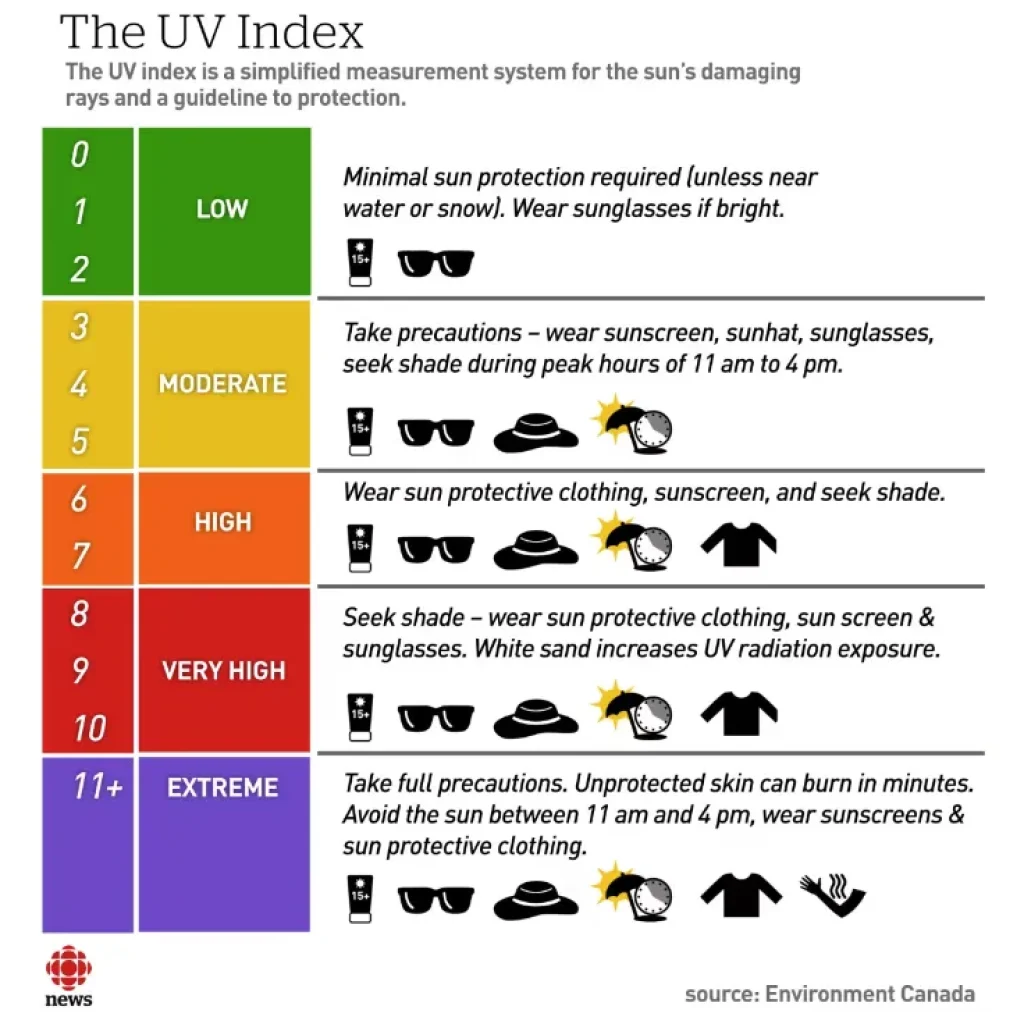
Here are some popular and effective apps that help you monitor UV levels and protect your skin and eyes:
Weather Apps with UV Index
Many standard weather apps, like The Weather Channel, AccuWeather, and Yahoo Weather, include UV index information. These apps provide daily UV forecasts along with weather updates.
UVLens provides real-time UV index data based on your location. It gives personalized recommendations on sun protection and reminds you when to reapply sunscreen.
UVIMate offers real-time UV index updates, personalized sun safety advice, and vitamin D tracking. It also provides sun exposure history and detailed weather forecasts.
The Ultraviolet (UV) Index predicts the ultraviolet radiation levels on a 1-11+ scale. The UV Index provides a daily forecast of the expected intensity of UV radiation from the sun. To assist users in utilizing the UV Index forecast, EPA provides the following for viewing this information with your mobile device.
Using these apps can help you make informed decisions about how best to reduce UV exposure and enjoy the outdoors while keeping your skin and eyes safe from harmful UV rays.
from Cardinal Compliance Consultants https://cardinalhs.net/blog/simple-ways-to-reduce-uv-exposure-this-summer/
via Cardinal Compliance Consultants

Comments
Post a Comment